

Jump to a section
Gross profit is your total revenue minus the direct cost of goods sold (COGS). Net profit is the final "bottom line"—the amount remaining after all operating expenses, interest, and taxes are deducted. Between these lies operating profit, which accounts for day-to-day running costs. Gross profit measures production efficiency, while net profit indicates overall business sustainability.
As a small business owner, managing your financial performance often involves navigating various formulas. Grasping the concept of gross and net profit is crucial for making well-informed decisions regarding pricing and expenses. While it may take some practice to calculate these figures initially, understanding them empowers you to lead your business with confidence.
What is gross profit?
Gross profit is the difference between the selling price of your product or service and the cost of producing it. It shows how efficiently a company is producing and selling its goods or services.
For a service-based business, it's the job price minus the cost of the time spent doing the job. It's crucial to understand gross profit to ensure you're not selling at a loss.
What is included in Cost of Goods Sold (COGS)?
To calculate gross profit, you must first identify your Cost of Goods Sold (COGS). These are the direct costs tied to production. This typically includes:
-
Raw materials: The physical components of your product.
-
Manufacturing costs: Expenses directly related to the production process.
-
Packaging: The materials used to ship or present your product.
-
Direct labour: Wages for staff members who are directly involved in making the product.
Gross profit does not include "indirect" expenses like office rent, marketing, or administrative salaries. If you have a recent profit and loss statement, it should show your total COGS. If not, you can figure it out using this formula:
COGS = Starting inventory + purchases – ending inventory
How to calculate gross profit
To find your gross profit, use this simple formula:
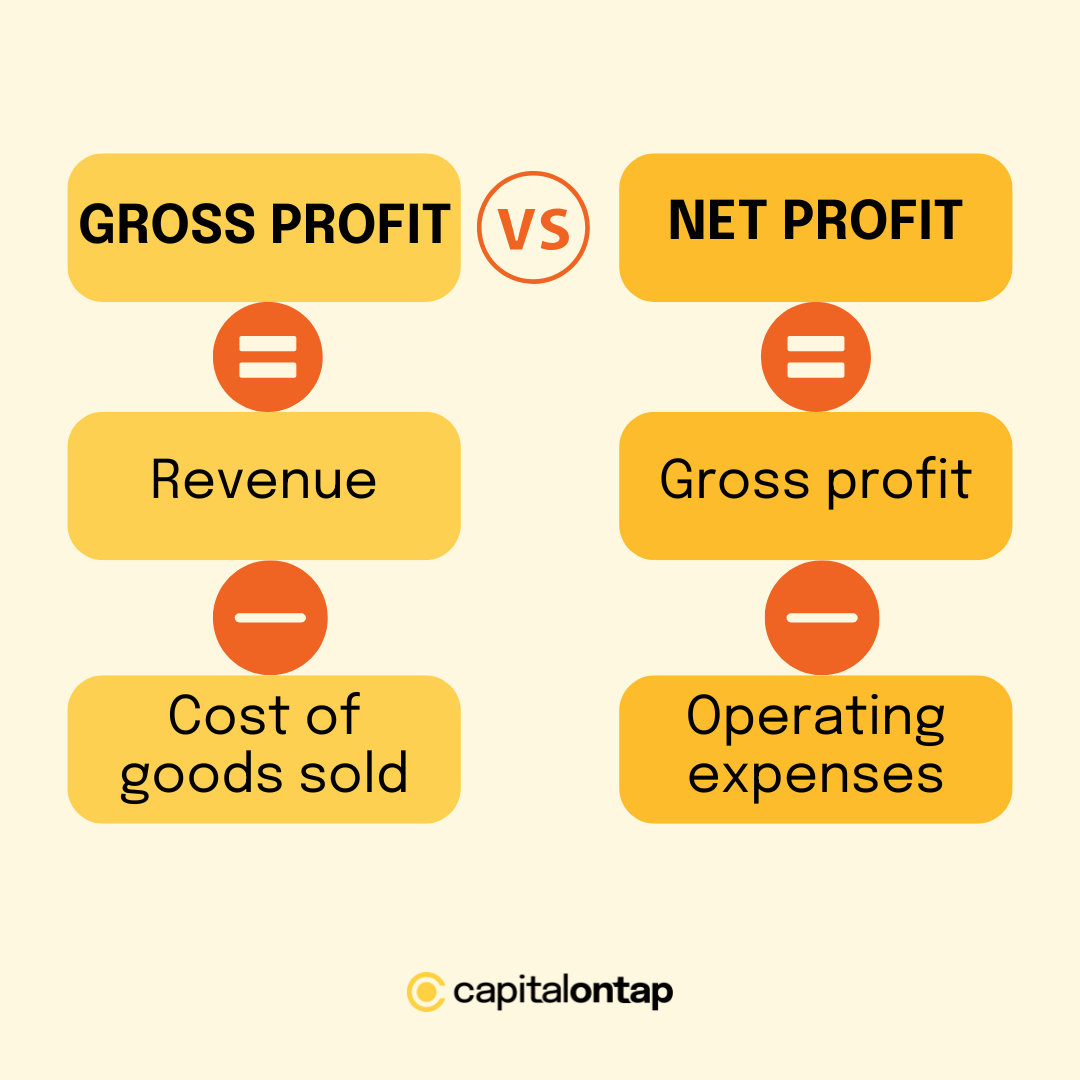
Gross Profit = Revenue - Cost of Goods Sold (COGS)
For example, if you sell a handmade candle for £11 and it costs £3 to produce, your gross profit per candle is: £11 (selling price) - £3 (COGS) = £8 (gross profit)
What is net profit?
Net profit, also known as the “bottom line”, is the final amount your business earns after deducting all operating expenses from your gross profit. It gives you a complete picture of your business’s financial health.
Understanding your net profit is crucial for assessing the overall financial viability of your business. This is because it reflects your business’ true profitability after considering all costs associated with both production and day-to-day operations.
What costs are included in net profit?
Net profit includes the same costs as the gross profit, plus all the other costs of running your business (commonly called operating expenses), including salaries, rent, software, and bank charges or credit card fees (if your business credit card charges these).
How to calculate net profit
To figure out your net profit, you’ll need to use your gross profit calculation:
Net profit = gross profit − operating expenses
For example, if your monthly operating expenses to make your handmade candles amount to £5 per candle, your net profit would be: £8 (gross profit) - £5 (operating expenses) = £3 (net profit).
How to calculate operating profit margin
Operating profit margin measures the percentage of revenue left over after paying for variable costs of production and fixed day-to-day running costs. It is a vital metric for understanding how much of every £1 earned is actually available to cover taxes and interest.
Operating Profit = Gross Profit - Operating Expenses
Operating Profit Margin = (Operating Profit / Total Revenue) x 100
For example, if your business has an operating profit of £20,000 on £100,000 of revenue, your operating profit margin is 20%. Tracking this helps you see if your business is becoming more or less efficient over time.
Key differences between gross profit and net profit
Gross profit focuses on the earnings from your main production activity, while net profit considers the entire business operation.
-
Gross profit is the money you make from selling your product after subtracting the direct costs of making or buying it.
-
Net profit takes a wider view; it considers every outgoing, including rent and Corporation Tax.
Net profit gives you a more realistic picture of how much money your company is really making after everything is taken into account.
Importance of gross and net profit for small businesses
Gross profit helps you see how manufacturing and labour costs affect your finances before considering other expenses. It allows you to figure out how much money remains from your sales after covering things like raw materials and labour. This can help you spot issues like paying too much for materials or having too many workers. For instance, if most of your profit is going into raw materials, you might need to find a cheaper supplier.
On the flip side, net profit gives a broader view of your overall financial health. It includes all costs, not just production ones, giving insights into cash flow. Unlike gross profit, net profit is a key metric that can attract investors because it shows how profitable your company truly is.
Improving gross and net profit margins
Now you’ve calculated your gross and net profits, you can start looking at how to improve your profit margins:
How to improve gross profit?
- Cost reduction: Find ways to make your product more efficiently. Can you negotiate with suppliers for better material prices to lower costs?
- Pricing adjustments: Regularly check if your prices cover your production costs. If they don’t, you may need to increase your prices.
How to improve net profit?
- Expense management: Be smart about your spending. Can you reduce your utility bills by using energy efficient practices?
- Revenue optimisation: Look for ways to increase sales through marketing or new products.
The bottom line
Grasping the difference between gross profit and net profit is essential for your business’ pricing and expense management. Use gross profit to understand core earnings and net profit for a complete picture of your financial health. Understanding these figures can help you decide when to invest in growth or when to cut back on overheads.
If you’re ready to enjoy enhanced cash flow, simplified expense tracking, and the potential for rewards, apply for a Capital on Tap Business Credit Card in under 2 minutes today.
Frequently asked questions
Does gross profit include salaries?
It depends. If wages are directly tied to production (e.g., factory workers), they are included in the cost of goods sold (COGS). Generally, staff salaries fall under operating expenses.
Is net profit always less than gross profit?
Yes. Since net profit accounts for additional expenses beyond production, it is always lower than gross profit unless a business has no operating expenses.
Can a business earn a gross profit but incur a net loss?
Yes. If operating expenses exceed gross profit, the business will experience a net loss.
Does gross profit include VAT?
No. VAT is not included in gross profit calculations since it is a tax collected on behalf of the government.
Is gross profit or net profit more important?
Both are vital. Gross profit tells you if your product is priced correctly, while net profit tells you if your entire business is actually making money after all bills are paid.
Does gross profit include taxes?
No. Taxes, such as Corporation Tax, are deducted much later in the calculation and only affect your final net profit figure.
What is a good net profit margin for a small business?
While it varies by industry, a net profit margin of 10% is often considered average, while 20% is considered high for many UK small businesses.
How does COGS affect my gross profit?
COGS has a direct inverse relationship with gross profit. If your Cost of Goods Sold increases and you do not raise your prices, your gross profit will decrease.
This does not constitute financial advice. If you want to understand your profits in detail, contact your financial advisor or accountant.